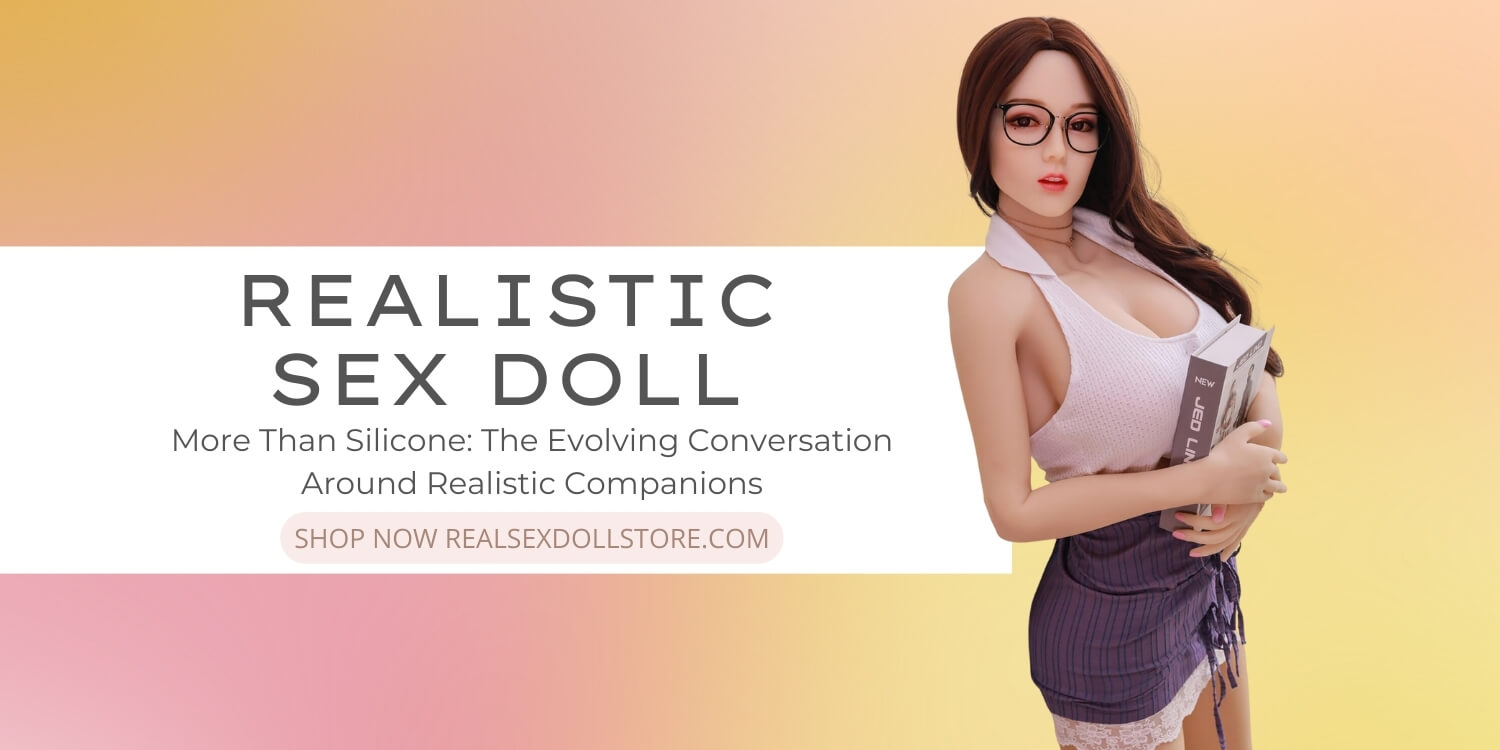
Let’s start with a simple, undeniable fact: the landscape of human intimacy and companionship is changing. It’s broadening, facilitated by technology and a growing understanding of diverse needs. At the centre of this complex, often misunderstood evolution is the realistic sex doll—a product that has transcended its crude, novelty origins to become a sophisticated piece of design engineering, and more importantly, a subject of nuanced human stories.
To view these dolls merely as “objects” is to miss the profound shift they represent. They are, first and foremost, a canvas. A canvas for technology, artistry, and, most significantly, for human projection, need, and sometimes, healing.
The Artistry Behind the Form
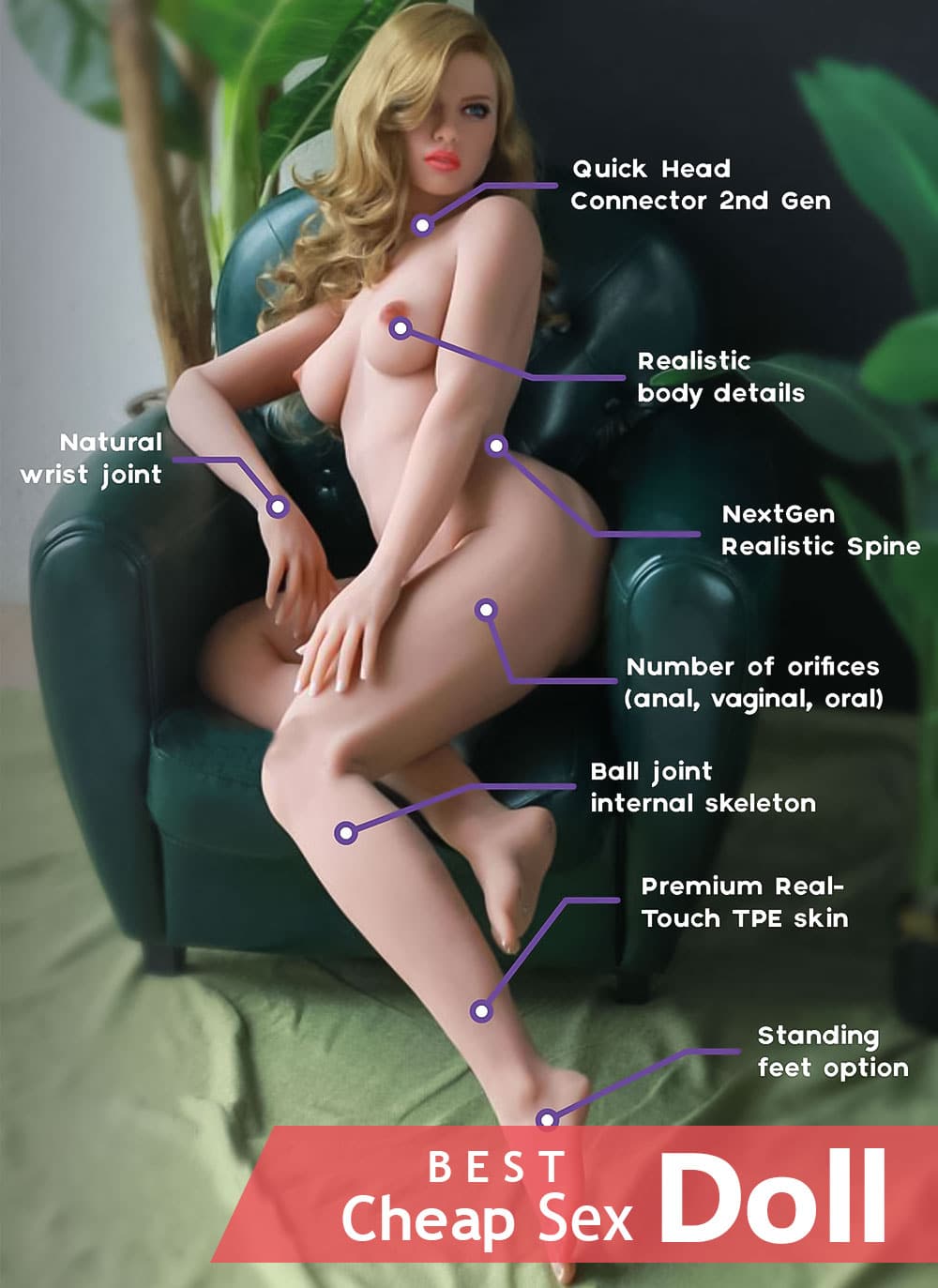
Gone are the days of uniform, vacu-formed figures. Today’s realistic dolls are feats of design. High-grade medical silicone and advanced thermoplastic elastomers (TPE) mimic the warmth, give, and texture of human skin with astonishing accuracy. Artists pore over anatomy, sculpting not just bodies, but potential—the curve of a spine, the line of a collarbone, the subtle expression around the eyes. Articulated skeletons allow for natural posing, a silent companionship on a living room chair, and a sleeping figure in a bed.
This hyper-realism isn’t about “trickery.” It’s about immersion and choice. For the owner, it bridges a gap between imagination and tactile reality. The weight, the presence, the careful styling of a wig, the selection of eye color—these are acts of customization that create a personalized form of companionship. It is a quiet, creative process, far removed from sensationalized headlines.
Beyond the Physical: The Spectrum of Companionship
The most common misconception is that the sole purpose is sexual. While intimacy is a component for many, it is rarely the entire story. For a growing number of people, these dolls serve profoundly human roles:
- Solace in Solitude: For widowers and widows, the doll can be a tactile anchor against the echoing silence of loss. It is not a replacement for a person—a notion that is both impossible and disrespectful—but a comfort object of unparalleled physical presence. It helps manage touch starvation, a very real and debilitating condition.
- A Safe Harbour for Trauma and Social Anxiety: Individuals who have suffered trauma or who live with severe social anxiety can find in a doll a pressure-free zone for tentative reconnection with physical touch and companionship. It is a non-judgmental presence, allowing for the practice of care (dressing, grooming) and the receipt of silent company without the overwhelming complexities of human interaction.
- The Artist’s Muse: Photographers, filmmakers, and digital artists utilize these dolls as incredibly versatile models. They hold a pose indefinitely, exist in any environment, and can be transformed into characters limited only by the creator’s vision.
- A Challenge to Expectations: For some, owning a hyper-realistic doll is a conscious statement against societal norms regarding relationships, autonomy, and consumption. It represents a choice to define one’s own intimacy on one’s own terms.
Navigating the Ethical Landscape
This territory is not without its necessary and serious ethical questions. These discussions are vital and mirror broader conversations about technology and humanity.
- Objectification vs. Personalization: Critics argue that dolls inherently objectify. Proponents counter that the deeply personal nature of customisation and care can foster a sense of responsibility and connection that defies simple categorisation. The line is blurry and personal.
- Impact on Human Relationships: Does ownership hinder social skills or provide a therapeutic bridge? Evidence points both ways, suggesting the outcome depends entirely on the individual’s mindset and mental health. Used as a total substitute for human connection, it can be isolating. Used as a tool for healing or exploration, it can be beneficial. The doll is not the agent; the human is.
- The Representation Debate: The industry must and is slowly evolving to offer more diverse body types, ages, and ethnicities, moving beyond a narrow, often hypersexualized ideal. This diversity is crucial for the doll to be an actual canvas for a broader range of human stories.
The Future: Sentience, Sensation, and Society
We stand at an interesting precipice. Technology is integrating AI and robotics, creating companions that can hold simple conversations, recognize faces, and simulate responsive touch. This raises even more profound questions about attachment, dependency, and the nature of consent and consciousness.
Yet, perhaps the most significant evolution isn’t in the dolls, but in us. The conversation is moving from titillation and stigma toward a more empathetic, if cautious, curiosity. We are beginning to ask: what human need does this fulfil? What loneliness does it address? What creative door does it open?
A realistic sex doll is, in the end, an intricate mirror. It reflects our artistry, our loneliness, our trauma, our desires, and our endless search for connection in an increasingly disconnected world. It challenges our deepest assumptions about love, need, and what it means to be in a relationship.
Understanding this phenomenon is not to endorse it universally, but to recognize its complexity. It is a story not of silicone and steel, but of the human condition—in all its messy, seeking, and solitary glory. The doll itself is inert. The meaning, the companionship, the controversy, and the quiet comfort? That is, and always will be, profoundly human.